

High-end Navi GPUs and ray tracing are coming to Radeon graphics cards, AMD CEO teases - rixtumpal

Gordon Mah Ung/IDG
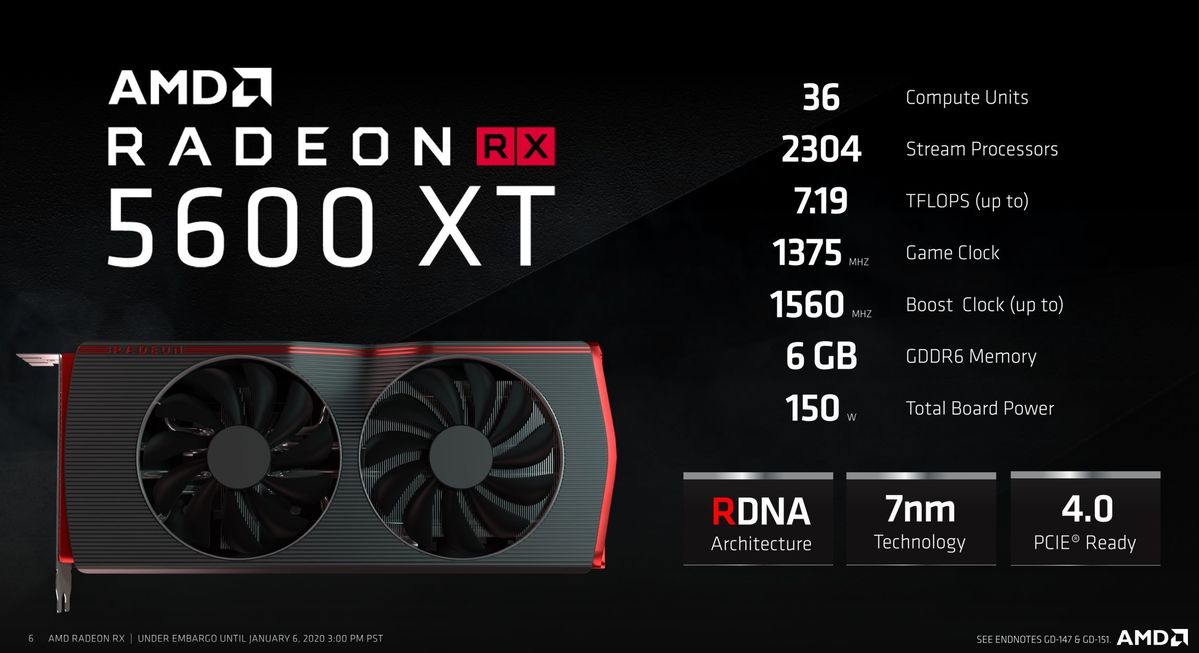
AMD disclosed the Radeon RX 5600 XT during its CES 2020 keynote on Monday, aiming its new "Navi" RDNA architecture at Microcomputer play's 1080p sweet descry after tackling 1440p with the superb Radeon RX 5700 series and targeting budget gamers with the Radeon RX 5500 XT. But AMD's plans for Navi don't stop there. In a small roundtable with conjur after the event, which PCWorld attended and Anandtech transcribed, CEO Lisa Su gave us hints about what's coming next for Radeon graphics cards.
First sprouted: Su reaffirmed that higher-end "Big Navi" graphics cards are incoming, a discloser first excited during a claim with financial analysts last fall. "The discrete graphics grocery store, particularly at the countertenor end, is same important to United States of America," Su stated at the CES roundtable. "So you should require that we will ingest a in high spirits-oddment Navi, although I don't usually comment on unannounced products."
It's fashio too earlier to speculate much on what to wait from Giving Navi, though Anandtech's Ian Cutress made some sharp observations about how AMD might apply lessons from developing the GPUs in their business leader-efficient Ryzen 4000 laptop computer processors to discrete graphics. The Radeon verbalize starts at the 5:36 mark in the video enclosed down the stairs.
Here's what we said when Su first teased the prospect of a bigger, badder Navi GPU in August:
"Watch out, GeForce RTX 2080 Super? Perhaps. The last Large elevate wasn't A, well,super as the RTX 2060 and 2070 Super that Nvidia free to counter the RX 5700 series. AMD's provident-lasting "GCN" graphics architecture, the grounding for Radeon GPUs since 2012, dependent up to 64 compute units (CU) per buffalo chip. The more powerful of the ii new Radeon GPUs, the RX 5700 XT, packs 40 CUs, giving the new RDNA architecture plenty more headroom if it scales up as effectively as its predecessor.
In that respect's a chance AMD could even have the furious $1,200 GeForce RTX 2080 Ti in its sights—specially if the RDNA architecture can surpass GCN's 64 CU limitation."
But after the CES roundtable, there's some other question in everyone's thoughts: Will Big Navi even be supported the first-gen RDNA computer architecture found in today's Radeon RX 5000-series artwork card game?
And what of ray trace, which isn't currently supported by whatsoever Radeon posting? When asked whether time period ray tracing will be As momentous as Nvidia claims, Su said the following:
"I've said in the past that electron beam tracing is important, and I still believe that, but if you look at where we are now it is still very first. We are investing heavily in ray trace and investing heavily in the ecosystem around it – both of our console partners give also same that they are using ray tracing. You should carry that our distinct graphics atomic number 3 we experience 2020 will also take up ray tracing."
 AMD
AMD The Radeon RX 5600 XT was announced at CES 2020, focused happening no-compromises 1080p gaming.
Indeed not only is AMD enabling irradiatio trace on the Xbox Series X and PlayStation 5 towards the end of the year, Su well-nig confirms that we'll see it on around form of distinct Radeon graphics card in 2020, too. Rumors are already swirling some second-gen RDNA GPUs, with faster speeds and bigger exit sizes. The RT cores in Nvidia's Turing GPUs soak up a lot of place, so it stands to reason that farther RDNA iterations will need to get larger to support ray tracing, overly.
A Big Navi graphics board with even better power efficiency and time period ray tracing backing could potentially give Nvidia's unopposed GeForce RTX 2080 Ti just about serious confrontation. But Su's comments, while insightful, are just teasers for in real time though. We'll have to see how information technology all comes together—and what Nvidia's retort-punch winds up being. Nvidia's expected to set in motion following-gen GeForce graphics card game sometime in 2020, upgrading to a 7nm process like Navi, and that could wind up significantly moving the force and performance goalposts. The last clock Nvidia jumped process nodes, the GeForce GTX 10-series knocked its unilateral predecessors out of the park.
One matter's certain however: 2020 is winding up to be a momentous yr for PC gaming enthusiasts. We can't wait to see what AMD's Navi architecture can bring to ill-smelling-end graphics cards.
Note: When you buy in something after clicking links in our articles, we May earn a small mission. Read our affiliate link policy for more than inside information.
Brad Chacos spends his years digging through desktop PCs and tweeting too such.

Source: https://www.pcworld.com/article/398611/high-end-navi-gpus-and-ray-tracing-are-coming-to-radeon-graphics-cards-amd-ceo-teases.html
Posted by: rixtumpal.blogspot.com
0 Response to "High-end Navi GPUs and ray tracing are coming to Radeon graphics cards, AMD CEO teases - rixtumpal"
Post a Comment